
 By
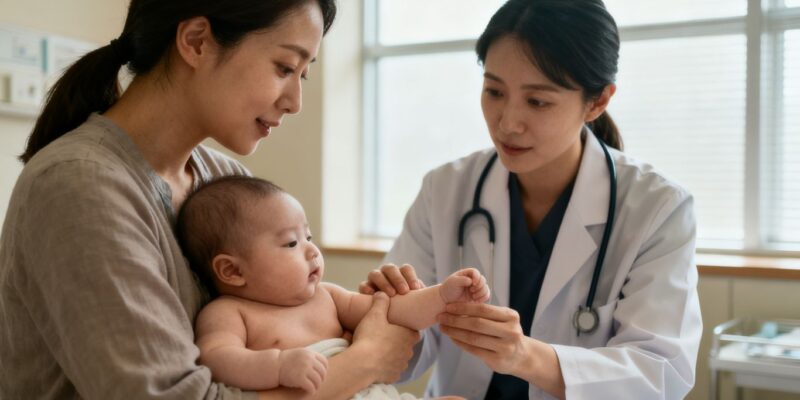
A newborn’s arm depends on a network of nerves that begins near the spinal cord and extends through the shoulder into the hand. When some of these nerves are injured around birth, the child may have weakness or reduced movement in part or all of the arm. Erb’s palsy is one pattern of brachial plexus injury, usually involving the upper nerves.
The brachial plexus nerves that control arm movement and sensation
The brachial plexus is formed by nerves that travel from the neck into the shoulder and arm. Its branches carry signals that help control movement and sensation in the shoulder, arm, and hand. An overview of brachial plexus birth palsy can help families understand where this nerve network runs and why different injuries affect different parts of the arm.
How an injury to the upper nerves can affect a newborn’s arm
Erb’s palsy most often affects the upper part of the plexus, especially nerves associated with the C5 and C6 spinal levels. A newborn may have trouble lifting or rotating the shoulder and bending the elbow, while movement of the wrist or fingers may be less affected. The exact pattern varies, so clinicians assess each joint rather than relying on one typical posture.
Erb’s palsy compared with other brachial plexus injury patterns
The term Erb’s palsy describes an injury pattern, not a single level of severity. Injuries lower in the plexus may affect the hand more, while a more extensive injury can limit movement throughout the arm. The phrase erbs palsy is sometimes used informally, but a clinician’s description of which nerves and functions are affected is more precise.
Temporary nerve stretching versus more severe nerve damage
Some injuries involve temporary disruption of nerve signaling after stretching, while others include more substantial damage, such as a tear or a nerve pulled away from its connection near the spine. These differences cannot always be determined from how the arm looks in the first hours after birth. The degree of nerve injury matters because it can influence the pace of recovery and whether additional evaluation or treatment is needed.
Causes and risk factors around birth
Brachial plexus injuries can occur when forces during delivery stretch or compress nerves near a newborn’s neck and shoulder. Birth circumstances may be associated with a higher likelihood, but they do not explain every case. An injury can also occur when no obvious risk factor was present, so its cause and preventability cannot be determined from the diagnosis alone.
How stretching or compression can injure the nerves
The nerves pass through a relatively narrow area between the neck and shoulder. If the head and shoulder move apart or pressure is applied in a way that stretches this area, the nerves may be strained or damaged. The type and extent of injury depend on the forces involved and the individual nerve response; a difficult delivery does not automatically mean that an injury has occurred.
Birth circumstances associated with a higher risk
Some circumstances have been associated with a greater chance of brachial plexus injury, though none can predict with certainty what will happen in an individual birth. Examples clinicians may consider include:
- Shoulder dystocia, when a baby’s shoulder becomes lodged during delivery
- A larger-than-average birth size
- A prolonged or difficult labor
- Breech presentation, in which the baby is positioned feet or bottom first
These are risk associations, not proof of what caused a particular injury. They are considered alongside the birth history and the newborn’s examination.
Why an injury can occur without obvious risk factors
Not every newborn with a brachial plexus injury has a recognized risk factor, and not every birth with one of these circumstances results in an injury. The mechanics of labor and delivery can be complex, and some details may not be apparent from a brief summary of the birth. A careful review of the records and clinical findings can offer context, but it may not establish one certain cause.
What the injury does and does not indicate about preventability
The diagnosis indicates that nerve function has been affected; by itself, it does not establish how the injury happened or whether it could have been prevented. Those questions require a separate review of the circumstances, records, and relevant standards of care. Families seeking an explanation can ask the care team to clarify the findings and the basis for any conclusions rather than inferring responsibility from the diagnosis alone.
Signs and symptoms in a newborn
The clearest early sign is often a difference in how the two arms move. A newborn may move one arm less spontaneously or have difficulty with particular shoulder, elbow, wrist, or hand movements. Because newborn behavior varies and other conditions can also limit movement, a noticeable difference should be assessed by a healthcare professional.
Differences in movement between the affected arm and the other arm
Caregivers may notice that one arm stays still while the other moves, or that the baby does not bend the elbow or raise the shoulder on one side as expected. Some infants have weakness in only a few movements; others have more widespread loss of motion. Clinicians look at movement across several joints and observe whether the pattern persists when the baby is calm and alert.
Common arm and shoulder positions
An affected arm may rest close to the body and turn inward, with the elbow straighter than the other elbow. This position can occur when upper-plexus nerves are involved, but it is not enough on its own to confirm Erb’s palsy. The appearance may change as the baby moves, so a physical examination is more informative than a single observation.
Changes in reflexes and responses to touch
A clinician may compare reflexes, including the newborn startle response, and observe whether each arm responds similarly. Responses to touch can be difficult to assess in a very young infant, and a reduced response does not by itself prove a sensory nerve injury. Taken together with movement and the birth history, these observations help the care team decide what further assessment may be appropriate.
Signs that may point to another injury or need prompt assessment
A fracture around the shoulder or collarbone can also make a newborn reluctant to move an arm, and pain or tenderness may be present. Breathing difficulty, an unusually weak cry, marked swelling, or a hand that appears pale or cool should be brought to a clinician’s attention promptly. Urgent or concerning symptoms need timely medical assessment rather than being assumed to stem from a nerve injury.
How doctors diagnose a brachial plexus injury
Diagnosis begins with the newborn’s movement and a review of the birth history. The clinician checks which parts of the arm move, whether the pattern matches a nerve injury, and whether another problem might explain the findings. Follow-up matters because changes over time can clarify the extent of the injury and guide care.
Newborn physical examination and birth history
The clinician compares both arms, testing movement at the shoulder, elbow, wrist, and fingers while observing the baby’s spontaneous activity. The birth history may include the baby’s position, how delivery proceeded, and any complications noted by the team. No single examination finding is interpreted in isolation; the overall pattern helps determine whether brachial plexus injury is likely.
Checking for fractures and other possible causes of limited movement
A fracture or another musculoskeletal problem may resemble nerve-related weakness because both can reduce arm movement. The clinician may check for tenderness, swelling, or discomfort with gentle examination and consider whether imaging is needed. Identifying another cause is important because its care may differ from treatment for a brachial plexus injury.
When imaging or nerve tests may be considered
Imaging is not required in every case, but it may be used when the examination raises concern about a fracture or another injury. Nerve tests or additional imaging may be considered if the diagnosis is unclear, the injury appears more extensive, or recovery is not progressing as expected. The care team selects tests based on the infant’s findings; a test result is interpreted alongside the examination rather than on its own.
Monitoring arm function during follow-up visits
At follow-up, clinicians look for changes in strength and movement, including whether new motions are appearing and whether the shoulder and elbow are developing as expected. They may compare findings with earlier examinations and ask caregivers what they notice during everyday activities. Regular monitoring helps the team adjust exercises, referrals, or further evaluation as needed.
Treatment and care during recovery
Care is tailored to the baby’s injury pattern and progress. Many infants are managed with careful monitoring and guided movement, while some need assessment by a specialist team or consideration of surgery. Families should receive instructions specific to their child, since the right approach depends on the examination and recovery over time.
Early referral to a specialist care team
A clinician may refer a newborn to a team experienced in brachial plexus injuries, which can include specialists in child health, orthopedics, rehabilitation, or nerve surgery. Early assessment helps establish a baseline and gives families clear guidance about handling and follow-up. Referral does not mean that surgery will be needed; it allows the team to track function and plan care if progress is limited.
Gentle range-of-motion exercises and physical or occupational therapy
A therapist can show caregivers how to move the baby’s arm gently through safe ranges without forcing a joint. Physical or occupational therapy may support motion, comfort, and use of the affected arm as recovery unfolds. The exercises should match the clinician’s instructions, especially if a fracture or another injury has not yet been ruled out.
When nerve surgery may be considered
Surgery may be discussed when the baby has substantial weakness and recovery of key movements remains limited despite observation and therapy. The decision depends on the pattern and severity of the injury, examination findings over time, and specialist assessment. Families can ask what function the procedure is intended to address, what alternatives are available, and how the team will judge whether the timing is appropriate.
Supporting safe movement and home exercises
Caregivers can support recovery by following the therapist’s demonstration and including prescribed movements in calm, comfortable routines. The arm should be handled gently, and exercises should stop if the baby seems distressed or develops signs of pain. Keeping a note of new movements or concerns can help families give the care team useful updates at follow-up.
Recovery and long-term outlook
Recovery varies: some infants regain movement steadily, while others have weakness or restricted motion that lasts longer. The outlook depends partly on which nerves were affected and how severely, and progress is judged over repeated assessments rather than a single early exam. Continued support can help a child use the arm safely and take part in everyday activities as they grow.
Factors that influence how much movement returns
The type and extent of nerve damage are important factors, as is which movements are affected at the outset. The pace and pattern of improvement also help clinicians refine their expectations, although early signs cannot always predict the final outcome. A specialist can explain how the baby’s specific findings compare with the recovery expected for that injury pattern.
How recovery progress is assessed over time
Clinicians assess whether the baby is gaining movement and strength at the shoulder, elbow, wrist, and hand. They may also monitor joint flexibility and watch for differences in how the two arms are used. Caregivers’ observations between visits add useful context, but formal decisions are based on the full clinical picture.
Possible lasting effects on strength, movement, or joint development
Some children have persistent weakness, limited range of motion, or differences in how the shoulder and arm develop. These effects vary and are not inevitable, even when recovery takes time. Follow-up allows clinicians to identify emerging stiffness or functional concerns and discuss whether therapy or other support should change.
Supporting a child’s function and participation as they grow up
As a child grows, care can focus on practical goals such as reaching, dressing, play, and using both hands during daily routines. Therapists can suggest adaptations or activities suited to the child’s abilities, while clinicians continue to monitor function and joint health. The aim is to support comfortable movement and participation, with a plan that evolves as the child’s needs change.








Comments